
Preventable Deaths Tracker: designing a fast, accessible research platform
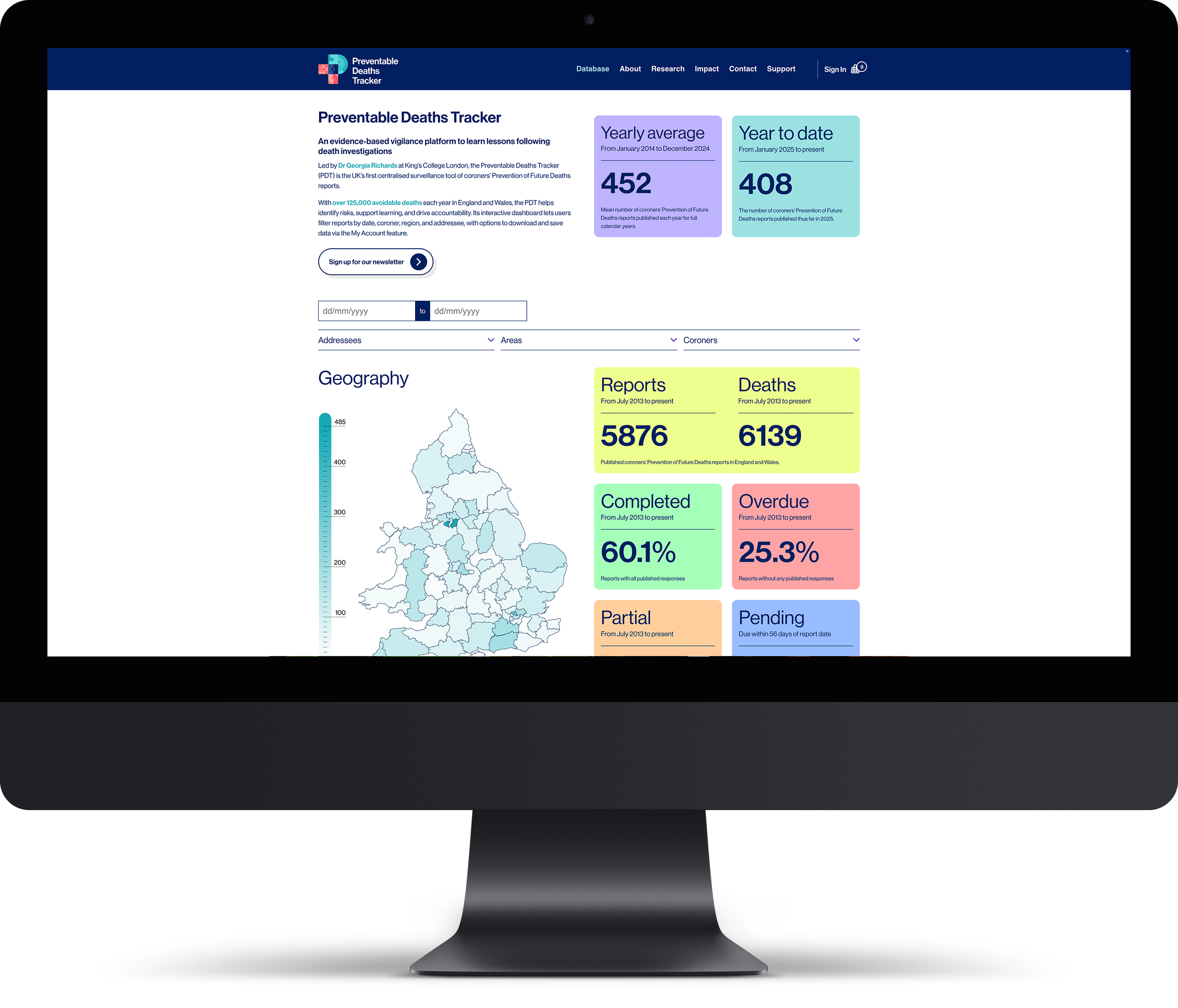
TwoFifths Design, a website design and development studio in Edinburgh, designed and built the Preventable Deaths Tracker for Dr Georgia Richards. The brief was to turn coroners’ Prevention of Future Deaths reports, which existed only as scattered PDFs, into a searchable database that researchers, journalists and policymakers could actually use. The result is a mobile first research platform that is fast, accessible and built to scale.
The starting point
PFD reports and responses existed as static PDFs. No central database. No easy way to filter by area, role, or year. No clear view of who had replied within the legal window. We set a single aim: convert documents into answers in under five minutes.
The plan
We mapped a data model for reports and responses. We normalised people, places, and organisations. We defined response states that users could understand at a glance. Then we designed an interface around three actions: filter, learn, act.
Sprint one: prove the pipeline
We automated collection from source pages. We parsed the content and stored it in a relational schema. Early prototypes exposed core flows: search by date, coroner, area, or addressee; view response status; export datasets.
Sprint two: system over pages
We shipped a modular design system. Lists and cards scale to thousands of entries. Maps and charts show patterns by region and topic. A simple account layer lets users save filters and re-run outputs. Copy stays plain and task-led.
Build: fast and accessible
We engineered a mobile-first UI with semantic HTML, keyboard focus, and readable type. Performance budgets kept pages lean. Large result sets remain responsive. Content structure supports search and sharing.
Launch day
The dashboard brings the landscape into focus. Total reports. Response rates. Pending responses inside the legal timeframe. Organisations most frequently addressed. Estimated economic burden to frame urgency. Users filter, compare, and export in seconds.
What changed
A live, centralised database now exists for reports and responses
Transparency improved through clear status tracking by year, area, coroner, and addressee
Policymakers, clinicians, and journalists gained a trusted evidence base
The team can update content without developer support
Behind the screens
Information architecture: reports, responses, entities, timelines
Data: automated ingest, relational schema, real-time metrics
Interface: filters, maps, charts, downloads, saved outputs
Governance: unambiguous status definitions and audit trails
Lessons
Clarity and structure turn PDFs into prevention. When models centre on accountability and action, users move from reading to doing.
What’s next
API and alerts: programmatic access and notifications for missed deadlines
Jurisdiction kits: roll-outs for Scotland, Northern Ireland, and overseas systems
Pro analytics: cohort analysis, trend alerts, and regulator views
Attribution loop: outbound click and download tracking to evidence change
Summary
Preventable Deaths Tracker is a focused evidence engine. It reduces friction from discovery to action and equips stakeholders to learn faster and prevent future deaths.
See the full project: Preventable Deaths Tracker